
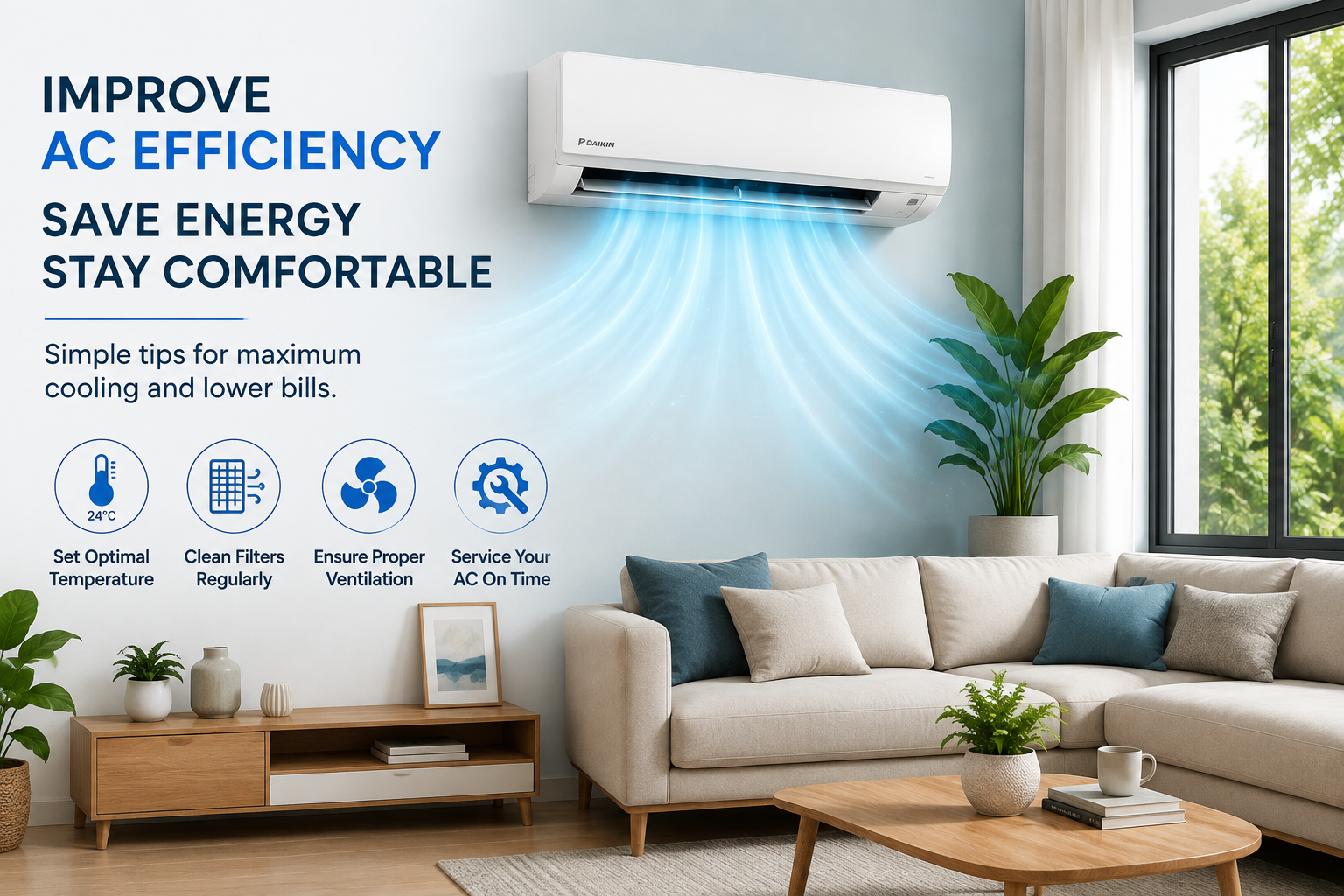
How to Improve AC Efficiency and Save Energy
How to Improve AC Efficiency and Save Energy
Air conditioners provide essential comfort during Nepal’s hot summer season and help maintain a pleasant indoor environment throughout the year. However, improper use, poor maintenance, and incorrect temperature settings can increase electricity consumption and reduce cooling performance.
The good news is that a few simple habits can improve your air conditioner’s efficiency, lower your electricity bill, and extend the lifespan of your AC system. Here are some practical tips to help you get better cooling while using less energy.
1. Set the Right Temperature
Setting your air conditioner to an extremely low temperature does not cool the room instantly. Instead, it forces the compressor to work harder and consume more electricity.
For comfortable and energy-efficient cooling, set the temperature between 24°C and 26°C. This temperature range provides a comfortable indoor environment while reducing unnecessary pressure on the AC system.
Avoid frequently changing the temperature. Choose a comfortable setting and allow the air conditioner enough time to cool the room properly.
2. Clean the Air Filters Regularly
Air filters collect dust, dirt, and other particles from the room. Over time, these particles can block airflow and reduce the cooling capacity of your air conditioner.
A dirty filter forces the AC to run longer to reach the desired temperature, resulting in higher electricity consumption. It can also reduce indoor air quality.
Clean the air filters every two to four weeks during regular use. Homes located near busy roads, construction areas, or dusty environments may require more frequent cleaning.
Regular filter cleaning can help provide:
Better airflow
Faster cooling
Lower electricity consumption
Improved indoor air quality
Reduced pressure on the AC system
3. Keep Doors and Windows Closed
Always keep doors and windows closed while the air conditioner is running. Open spaces allow cool air to escape and warm outside air to enter the room.
When this happens, the air conditioner must continue operating to maintain the selected temperature. This increases energy consumption and makes the room take longer to cool.
Check for gaps around doors and windows. Curtains, weather strips, and proper sealing can help prevent cooled air from escaping.
4. Reduce Direct Sunlight
Direct sunlight can significantly increase the temperature inside a room. During the hottest part of the day, close curtains, blinds, or window shades to reduce heat entering the room.
Light-coloured curtains and reflective window films can also help control indoor heat. A cooler room requires less effort from the air conditioner, resulting in better efficiency and lower electricity usage.
5. Use Sleep Mode at Night
Most modern air conditioners include a sleep mode designed for comfortable and efficient nighttime operation.
Sleep mode gradually adjusts the temperature while you are sleeping. This prevents the room from becoming too cold and reduces unnecessary compressor operation.
Using sleep mode can provide:
Comfortable sleeping conditions
Lower nighttime electricity consumption
Reduced noise
More consistent room temperature
6. Use a Timer
The timer function allows you to control when your air conditioner turns on or off.
Instead of leaving the AC running throughout the night or while no one is in the room, set a timer based on your schedule. You can also program the unit to turn on shortly before you arrive home.
Using a timer reduces unnecessary operating hours and helps control electricity costs.
7. Ensure Proper Air Circulation
Do not block the indoor unit with curtains, furniture, shelves, or decorative items. The air conditioner requires open space to distribute cool air evenly throughout the room.
Make sure that both the air inlet and air outlet remain clear. Proper airflow allows the room to cool faster and prevents the AC from working harder than necessary.
A ceiling fan can also help distribute cool air around the room. When using a fan with the AC, you may be able to maintain comfort at a slightly higher temperature setting.
8. Keep the Outdoor Unit Clear
The outdoor unit releases heat collected from inside the room. If it is blocked by dust, leaves, plants, walls, or stored materials, heat cannot escape properly.
Keep the area around the outdoor unit clean and well-ventilated. Avoid covering it completely or installing it in a tightly enclosed space.
Proper outdoor unit ventilation improves heat transfer and supports efficient AC operation.
9. Choose the Correct AC Capacity
Selecting the correct air conditioner capacity is very important.
An undersized AC may run continuously without cooling the room properly. An oversized AC may switch on and off too frequently, causing uneven cooling and unnecessary energy use.
The correct capacity depends on several factors, including:
Room size
Ceiling height
Number of windows
Amount of direct sunlight
Number of people using the room
Heat produced by appliances
Room insulation
A professional HVAC technician can calculate the cooling requirement and recommend the correct AC capacity for your room.
10. Use Energy-Efficient Inverter Technology
Inverter air conditioners automatically adjust compressor speed according to the room’s cooling requirement.
Unlike traditional fixed-speed systems that frequently turn the compressor on and off, inverter ACs maintain a more stable temperature with smoother operation.
The main benefits of inverter technology include:
Lower electricity consumption
Faster cooling
Stable room temperature
Quieter operation
Reduced compressor wear
Better long-term performance
When purchasing a new air conditioner, compare the energy-efficiency rating, cooling capacity, warranty, and after-sales support.
11. Schedule Regular AC Servicing
Regular professional servicing is one of the most effective ways to maintain AC efficiency.
During servicing, a qualified technician can inspect and clean important components such as:
Indoor unit filters
Evaporator coil
Outdoor condenser coil
Drainage system
Electrical connections
Refrigerant piping
Fan motor
Compressor operation
Professional servicing can identify small problems before they become expensive repairs. It also helps prevent water leakage, unusual noise, poor cooling, bad odours, and excessive electricity consumption.
For frequently used air conditioners, professional servicing is generally recommended before the summer season and whenever cooling performance starts to decrease.
12. Avoid Turning the AC On and Off Repeatedly
Frequently switching the air conditioner on and off can increase pressure on the compressor and electrical components.
Allow the system to operate until the room reaches the selected temperature. Modern inverter ACs automatically reduce their operating speed after reaching the required temperature, so repeatedly turning them off is usually unnecessary.
13. Maintain Proper Room Insulation
A well-insulated room stays cool for longer. Poor insulation allows heat to enter and cooled air to escape.
You can improve room insulation by:
Sealing gaps around doors and windows
Using proper curtains or blinds
Installing insulated roofing where possible
Closing unused openings
Reducing direct sunlight
Using energy-efficient windows
Better insulation reduces the workload on the air conditioner and improves overall comfort.
Signs That Your AC Needs Professional Attention
Contact a professional technician when you notice:
Weak or warm airflow
Unusual noise
Water leakage
Bad smell
Frequent automatic shutdown
Ice formation on the indoor unit
Increased electricity bills
Slow cooling
AC not responding to the remote
Outdoor unit not operating correctly
Continuing to use an air conditioner with these problems may increase electricity consumption and cause further damage.
Conclusion
Improving AC efficiency does not require complicated changes. Setting the right temperature, cleaning filters, keeping doors and windows closed, reducing direct sunlight, using sleep mode, and scheduling regular maintenance can significantly improve performance.
Efficient air conditioner use provides better cooling, lower electricity costs, cleaner indoor air, and a longer system lifespan.
For professional air conditioner sales, installation, repair, servicing, and maintenance, contact Advance Group Nepal. Our experienced team provides reliable HVAC solutions for homes, offices, commercial spaces, and other facilities across Nepal.